Every photograph has its own story
Sometimes it begins before sunrise. Sometimes it requires travelling hundreds of kilometres for a single
opportunity. And sometimes an unexpected encounter along the way becomes just as meaningful as the
photograph itself.
Behind every image in Rosary of Enlightenment there is a journey of searching, waiting, observing and
discovering. There are places I planned to visit and others I found by chance. There are people I met along the
way, conversations I did not expect, doors that opened and moments that could never have been planned.
Behind the Image tells these stories. Not only about how a photograph was made, but about everything that
happened around it… the people, places and unexpected moments that became part of the journey.
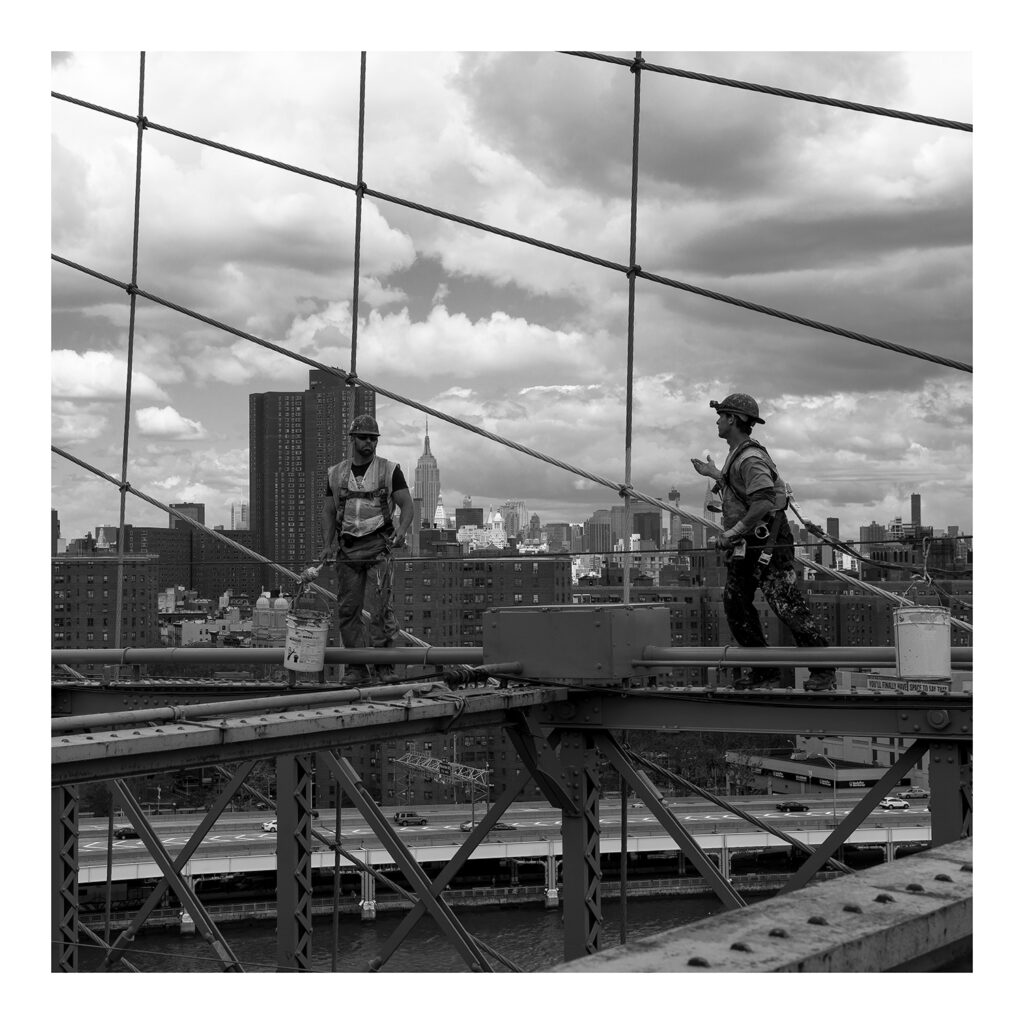
24 May 2011 | New York |
The Beginning of a New Way of Seeing
Sometimes a life changes not because of a major decision, but because of one unexpected moment. For me, that moment began on 24 May 2011 in New York, without the slightest idea of where it would eventually lead.
Together with my then partner, I spent a few days in Manhattan. From the moment I arrived, I felt at home in the city. New York breathes energy. Everything seems to be in constant motion, while history remains tangible on almost every street corner. It is a city that invites you not simply to look, but to learn to see differently.
Photography had already been my language for many years. I created panoramic photographs of cities and events, always searching for ways to make visible more than the human eye can take in at a single glance. Our conscious field of vision is limited; much of what we experience is absorbed without our being fully aware of it. That fascinated me.
For some time, I had been thinking about applying that idea to church interiors. Not through a traditional photograph, but through a vertical panoramic technique that might come closer to capturing the complete spatial experience — not only the architecture, but also the sense of wonder such a space can evoke.
In Manhattan, I decided to try the idea for the first time. I had no tripod with me, so I photographed handheld in the soft, limited light of St. Paul’s Chapel. Technically, the conditions were far from ideal, but intuitively I felt that I had discovered something I had been searching for.
When I returned home, disappointment followed. On my screen I could see that the photographs fell short technically. The resolution was lower than I had hoped, and the difficult conditions had left their mark. Yet that disappointment became the real beginning of the story.
Suddenly I remembered an assignment from my time at St. Joost Academy of Art.
Water. Light. Visibility. Separate thoughts suddenly came together in a single image. I decided to place the church under water. Not because I wanted to drown a church, but because water became a metaphor for the way we see. Enter the sea without light and everything appears dark and lifeless. Switch on a lamp and a world reveals itself that had been there all along: rich, colourful and full of beauty.
The underwater world has not changed. Your way of seeing has. I began to ask myself the same question about churches. Perhaps their beauty, meaning and social value have never disappeared. Perhaps we have simply lost the light by which we once knew how to see them.
From that moment, my photography became a search. Creating an image was no longer the central purpose. The question became how art might enable people to look again, at church buildings, at heritage, at spirituality and, ultimately, at themselves.
I could never have imagined that this first photograph in St. Paul’s Chapel would mark the beginning of an artistic journey that has now lasted more than fifteen years and taken me to dozens of churches at home and abroad. A search in which the building itself is not the final subject, but rather the encounter between art, heritage, spirituality and society.
That search is still not over. If anything, the question that arose in New York has only become more universal over the years.
Perhaps, in the end, the question is not what light the church needs in order to shine again. Perhaps it is what light we ourselves need in order to learn to see it, and perhaps one another, anew.
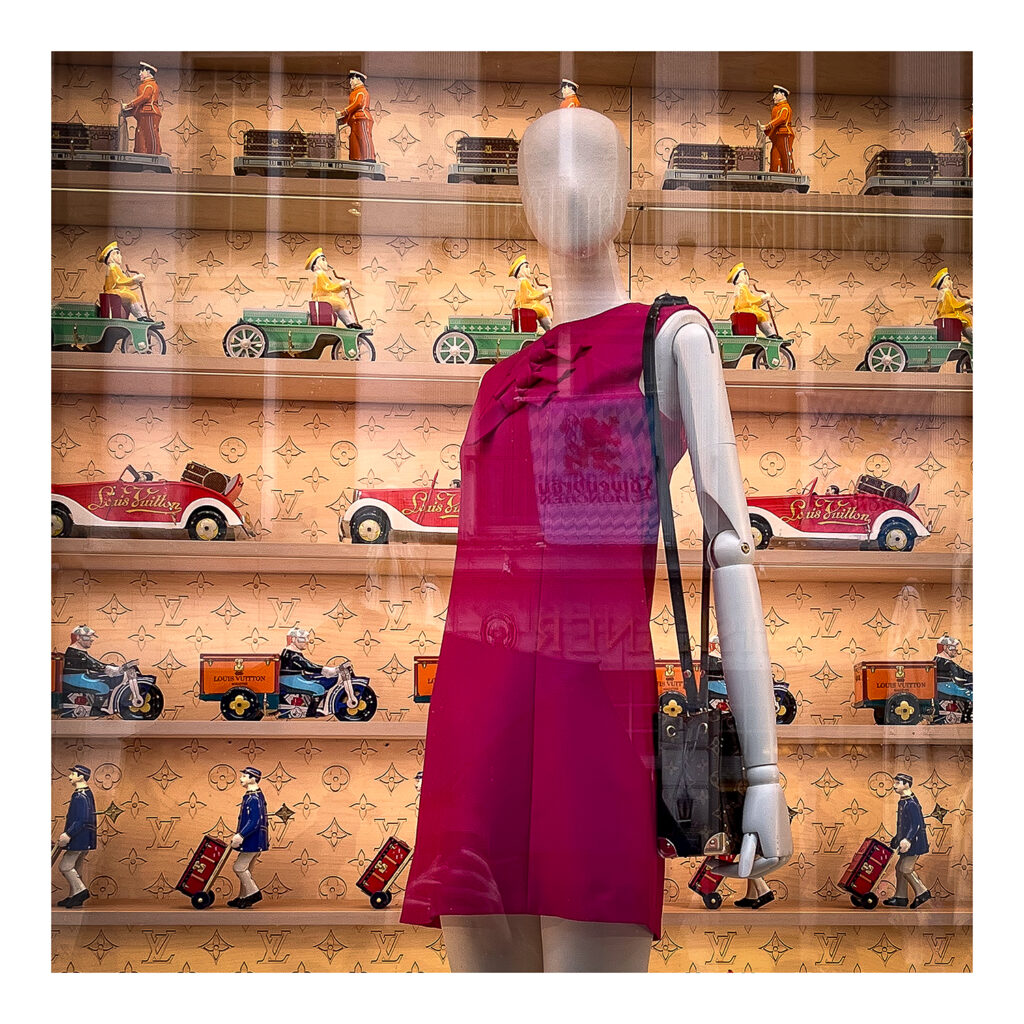
10 June 2026 | Munich |
An Unexpected Act of Kindness
After the long waiting game at the Asamkirche, I was relieved to have photographed the other three churches in Munich before half past twelve. Fortunately, they were considerably quieter than the small but immensely popular Asamkirche.
With most of my work finished for the day, I decided to spend the afternoon at the Residenz Museum. It was within walking distance of the Opera, in the heart of Munich’s historic centre, a perfect opportunity to experience something of the city’s secular history after spending the morning inside churches.
As so often happens in an unfamiliar city, I lost my way. While looking around, I noticed a young woman, perhaps twenty years old, crossing the street. She had long, curly hair and a remarkably friendly presence. I asked whether she knew how I could get to the Residenz Museum.
Without hesitation, she took out her phone, looked up the route and pointed me in the right direction. I thanked her warmly and continued on my way. Only a few streets later, I heard someone approaching behind me. To my surprise, it was the same young woman.
“Es tut mir leid,” she said. “Ich habe Ihnen den falschen Weg gezeigt.”
She had realised that she had sent me in the wrong direction and had actually run after me to correct her mistake. Once again she took out her phone and showed me the correct route.
“Wenn Sie möchten,” she said kindly, “kann ich ein Stück mit Ihnen gehen und Ihnen den Weg zeigen.”
If you like, I can walk with you for a while and show you the way. I thanked her for the offer and told her more than once how much her kindness meant to me. It is not every day that someone takes the trouble to run after a complete stranger simply because they have given them the wrong directions.
I continued my walk to the museum with a smile. Sometimes it is not the great monuments that make a journey memorable. Sometimes it is an unexpected encounter with someone who, without expecting anything in return, offers a small moment of genuine kindness.
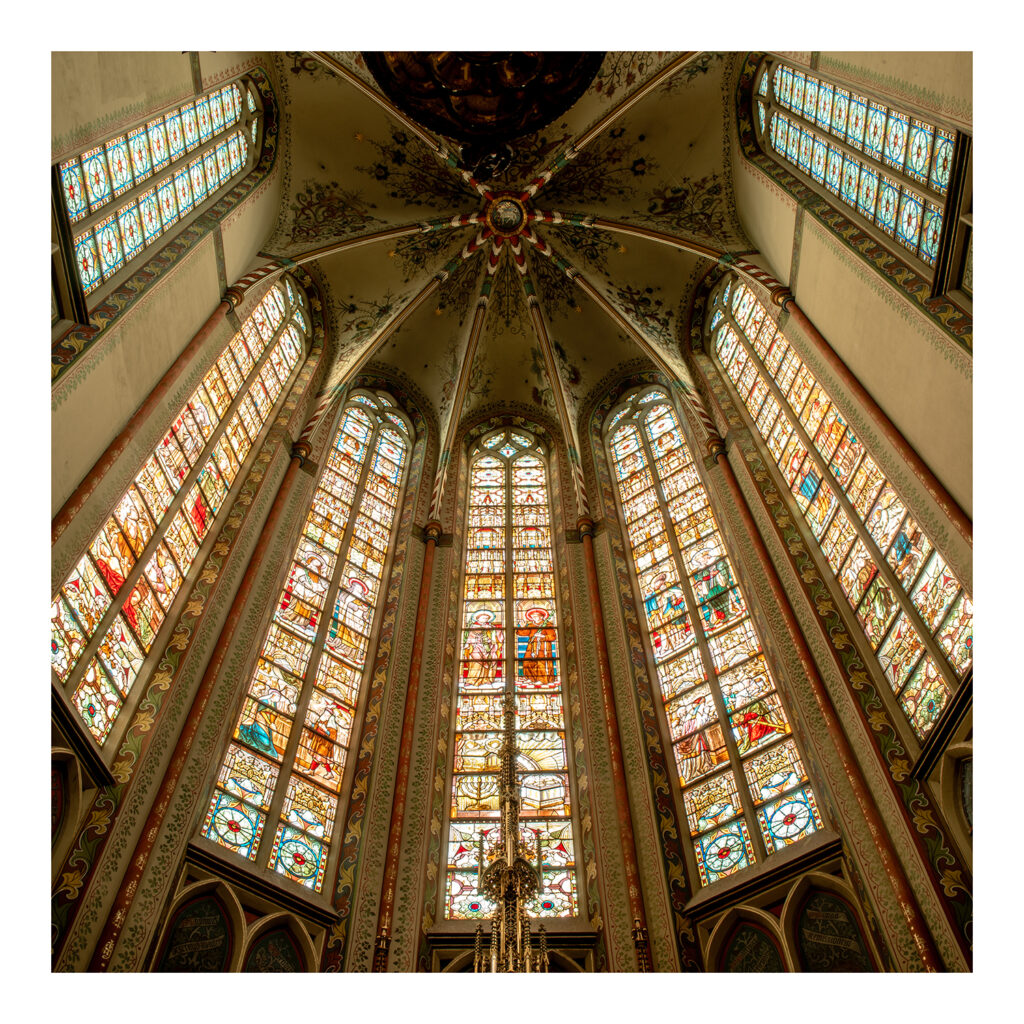
20 July 2019 | Utrecht |
An Unexpected Concert
On Saturday, 20 July 2019, my then wife and I spent a day in Utrecht. My Nikon D800 came with me, of course, as the Dom Church had been on my list of places to photograph for Rosary of Enlightenment for some time.
After taking the photographs, we decided to wander through the city. Utrecht is a wonderful place to explore on foot, particularly along its canals. With no particular plan, we continued walking until we came across a church I hardly knew: St. Willibrord Church. The door was open. Curious, we stepped inside.
What we found exceeded all expectations. The church had been beautifully restored and radiated an extraordinary sense of calm. But the first thing to catch my attention was not the interior.
A large tomcat was wandering between the pews as though he owned the place. I later learned that he simply slept there at night and had, in a way, become part of the church. I loved that.
A friar in a brown habit was also quietly walking around. I asked him whether I could take photographs. That was no problem at all, he said, as long as I did not use flash. He did not need to tell me twice. I never use flash.
After I had finished photographing, I showed him several images from Rosary of Enlightenment on my phone and told him about the project and my thoughts on keeping churches open. He looked carefully. With every photograph, his enthusiasm seemed to grow.
Then, quite suddenly, he said: “Wait a moment… I have a surprise for you.”
He walked towards the organ and smiled. “I haven’t done this for twenty-five years.”
A few moments later, the church filled with organ music. Not just one piece, but an entire spontaneous concert. It felt as though the whole church came alive. The vaults, the acoustics, the space, everything became part of the music. It felt as though the roof had literally come off. When he finished, we thanked him warmly. We had actually travelled to Utrecht that day for the Dom.
But it was this completely unexpected concert in St. Willibrord Church that made the day unforgettable.
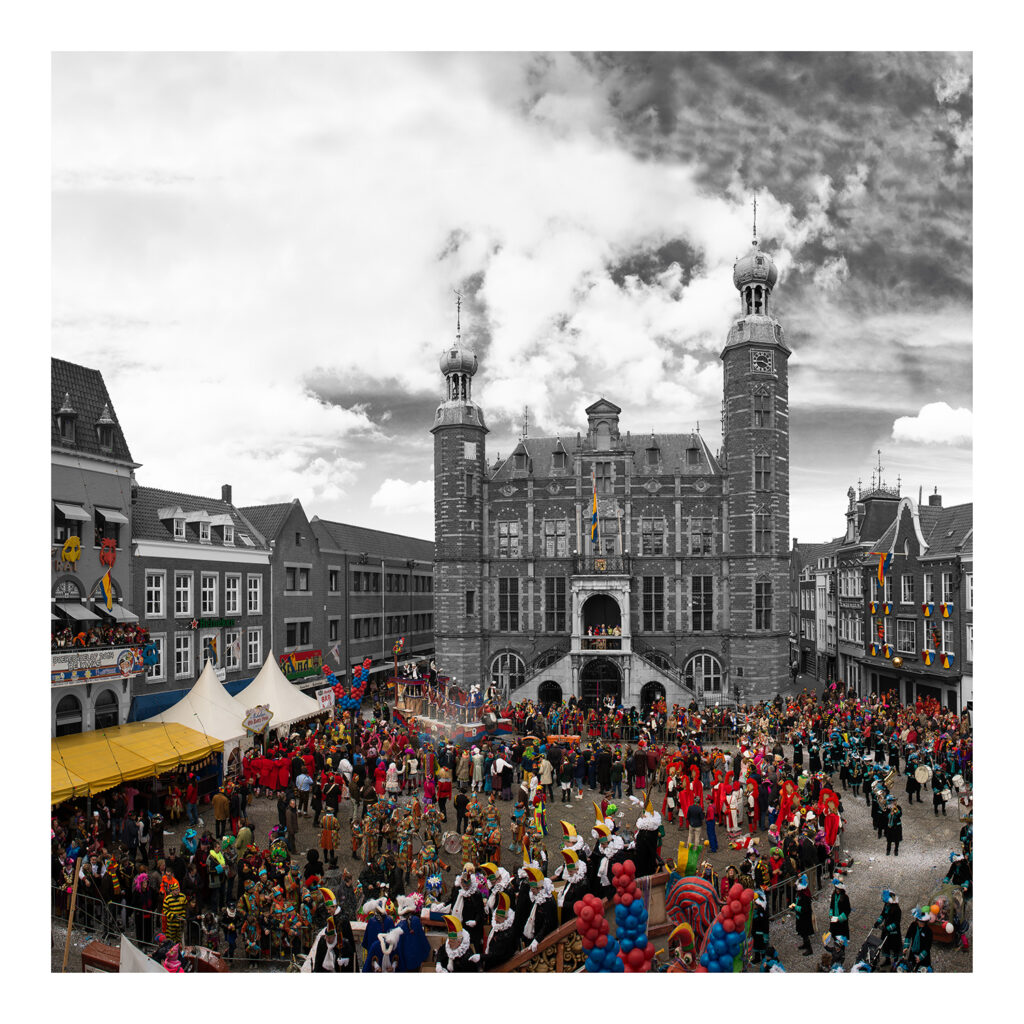
21 June 2026 | Venlo |
Why a Panorama?
People often ask me why I create panoramic photographs. The answer does not really lie in photography. It lies in my family.
More than twenty-five years ago, my father and I had the idea of creating a book about Venlo together. Not only about the city as it was then, but also about Venlo during the Second World War. My father was six years old when the war began. He lived in the heart of the city and experienced the bombing at close range. While bombs fell around the house, he sat with his family in the cellar. He often told me how the pressure from the explosions seemed to crush his head. Experiences like that never truly leave a person.
The war continued to shape his life. He developed an almost insatiable need to collect everything connected with that period: photographs, slides, newspaper clippings, documents and books. Eventually, the collection grew to around twenty thousand objects.
My father was a gentle and loving man, but he carried a deep sadness within him. At one point, he even lost the energy to continue working on his collection.
I hoped to awaken his enthusiasm again by bringing our two worlds together: his historical images and my panoramic photographs of contemporary Venlo. Slowly, he began to talk again, he came alive. We spent hours talking about the city, about the past and about the meaning of memory.
Sadly, the book was never completed. My father died in 2013, at the age of 79. But I continued creating panoramic photographs. Over time, I discovered that, for me, a panorama is much more than a wide image. The human eye consciously perceives only a limited part of reality. With a panorama, I try to reveal more, not only what we see directly, but also what exists around it.
The context, the space, the unconscious. From that idea, the vertical panorama eventually emerged. Inside a church, that form feels almost inevitable.
Where a horizontal panorama connects the world around us, a vertical panorama directs the gaze upwards. It follows the architecture, the domes and the vaults. It invites the eye to rise. Perhaps that is at the heart of Rosary of Enlightenment.
Not only to show what is visible, but also to point towards what lies beyond.
23 July 2026 | Mainz |
A Road Trip to Mainz
Some photographs begin long before the shutter is pressed. The idea to photograph the Augustinerkirche in Mainz was born several weeks earlier, during my journey through Bavaria.
At the end of that trip, I had planned to continue to Mainz. But after photographing eight churches, driving nearly 1,900 kilometres in four days and feeling the fatigue setting in, I decided against it. The church deserved my full attention, not the final hours of an exhausting journey.
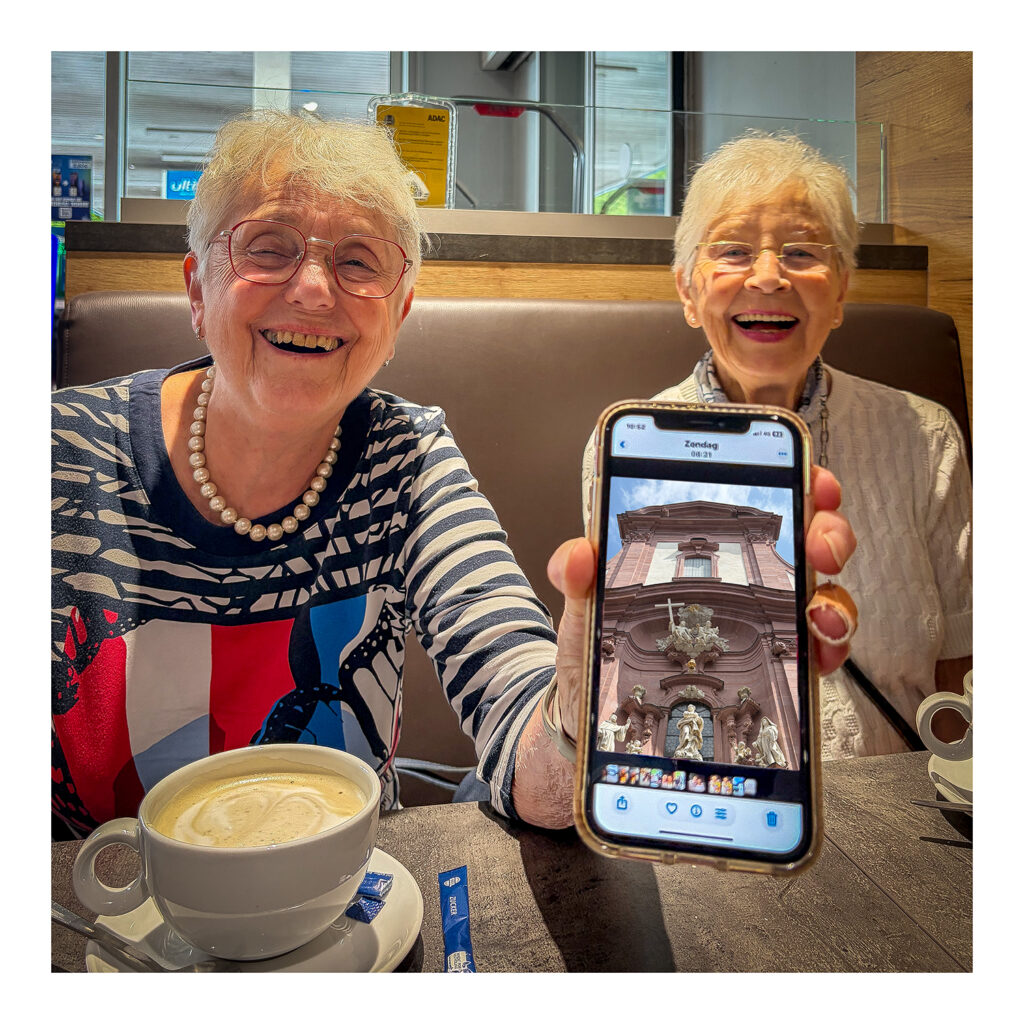
Instead, I made myself a promise. I would return another day. Not alone, but with my 92-year-old mother. When I asked her, she immediately liked the idea. Then I invited her close friend Léne, 84 years old. They have been friends for many years and, without hesitation, she replied: “Yes!”
On Thursday morning, 23 July, the fourteenth anniversary of my father’s passing, we left home at eight o’clock. The car was fully loaded: a rollator in the boot, two camera bags, my photography equipment and, of course, two bags filled with sandwiches, biscuits and drinks.
As my mother always says: “You never know what you’ll feel like on the road.”
The drive itself became part of the day. Stories from long ago resurfaced. Memories were shared. Conversations drifted naturally towards children, grandchildren and the different paths life had taken over the decades.
Halfway there, we stopped for coffee, stretched our legs and simply enjoyed travelling together. When we arrived in Mainz, we found the Augustinerkirche tucked away between the shops in the city centre. The moment they stepped inside, both ladies fell silent.
Neither of them had ever seen a Rococo church like this before. Their eyes wandered from one ornament to another, taking in every detail with genuine amazement. While they explored the interior, I unpacked my cameras.
Creating my vertical panoramas is a slow and deliberate process. I use the backrest of a pew as my support, carefully choosing the exact position before making the series of images that will eventually become a single photograph. Then the roles changed.
My mother, armed with her recently acquired iPhone 17, positioned herself comfortably behind her rollator and began photographing and filming me while I worked. Léne watched everything from the pew behind me, quietly following each step of the process. In the end, I created three panoramas.
Three photographs that may look effortless, but are in fact the result of many years of experimenting, failing, learning and refining.
Afterwards, I switched to my second camera to capture details of the church, ornaments, textures and architectural elements that will later find their way onto the website and social media as the project continues to grow. Once the photography was finished, the day changed pace completely.
The three of us wandered through the welcoming streets of Mainz, enjoying the city together. There is a local saying: “Mainz, wie es singt und wie es lacht.” Mainz, the city that sings and laughs.
It suited the atmosphere perfectly.
Around four o’clock in the afternoon, we packed everything back into the car and drove home. A journey of about 570 kilometres. But more than that, it became another reminder that In the Rosary of Enlightenment is never only about churches. It is about the people who travel with me. Sometimes they stand behind the camera.
Sometimes they wait patiently on a church bench, and sometimes they become part of the story behind the image itself.