Looking beyond architecture
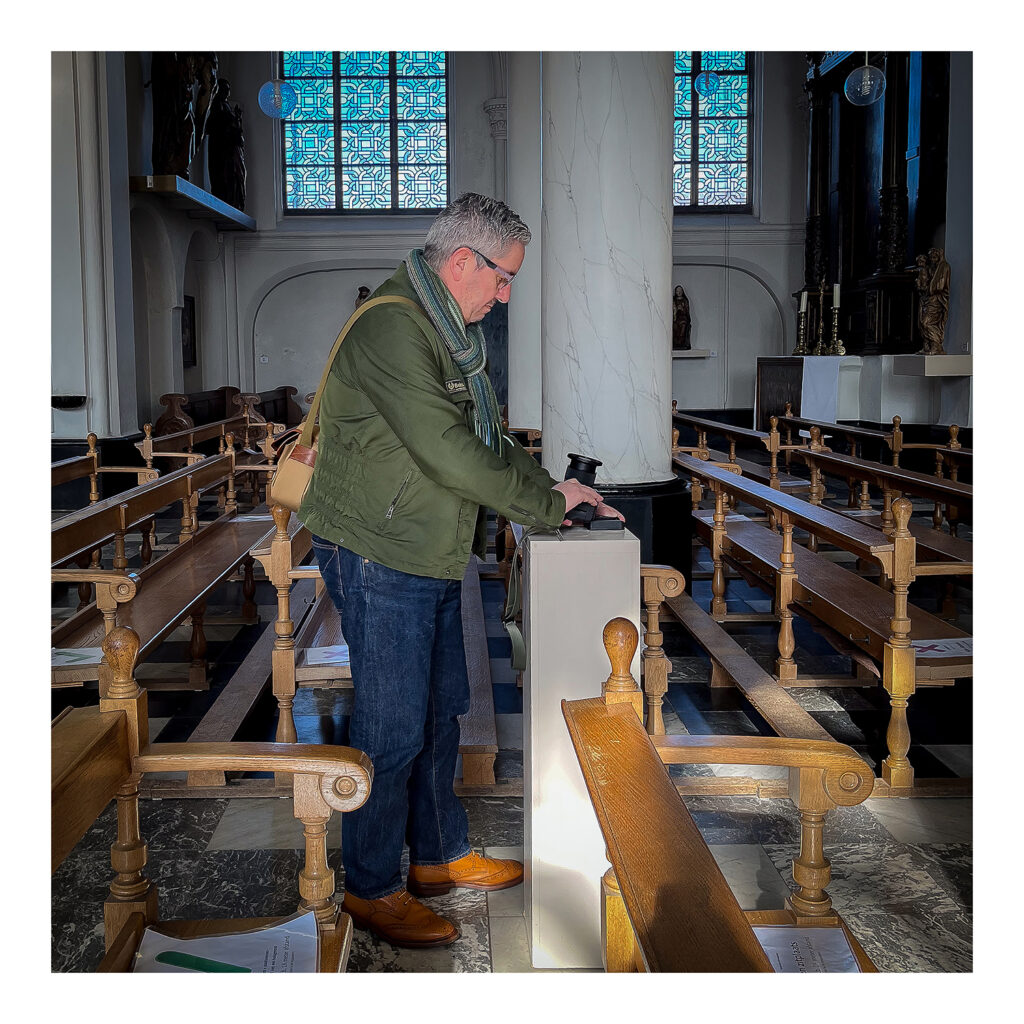
Rosary of Enlightenment began in 2011 with a camera, a church and a question: What are we going to do with all these empty churches?
From the beginning, I was fascinated by both the architecture of these extraordinary spaces and their uncertain future. Looking upwards, I discovered perspectives that could not be captured in a conventional photograph. I began developing my own vertical panoramic approach, bringing together what we look at directly and what lies beyond our immediate focus.
The photographs made on location are the starting point, not the final image.
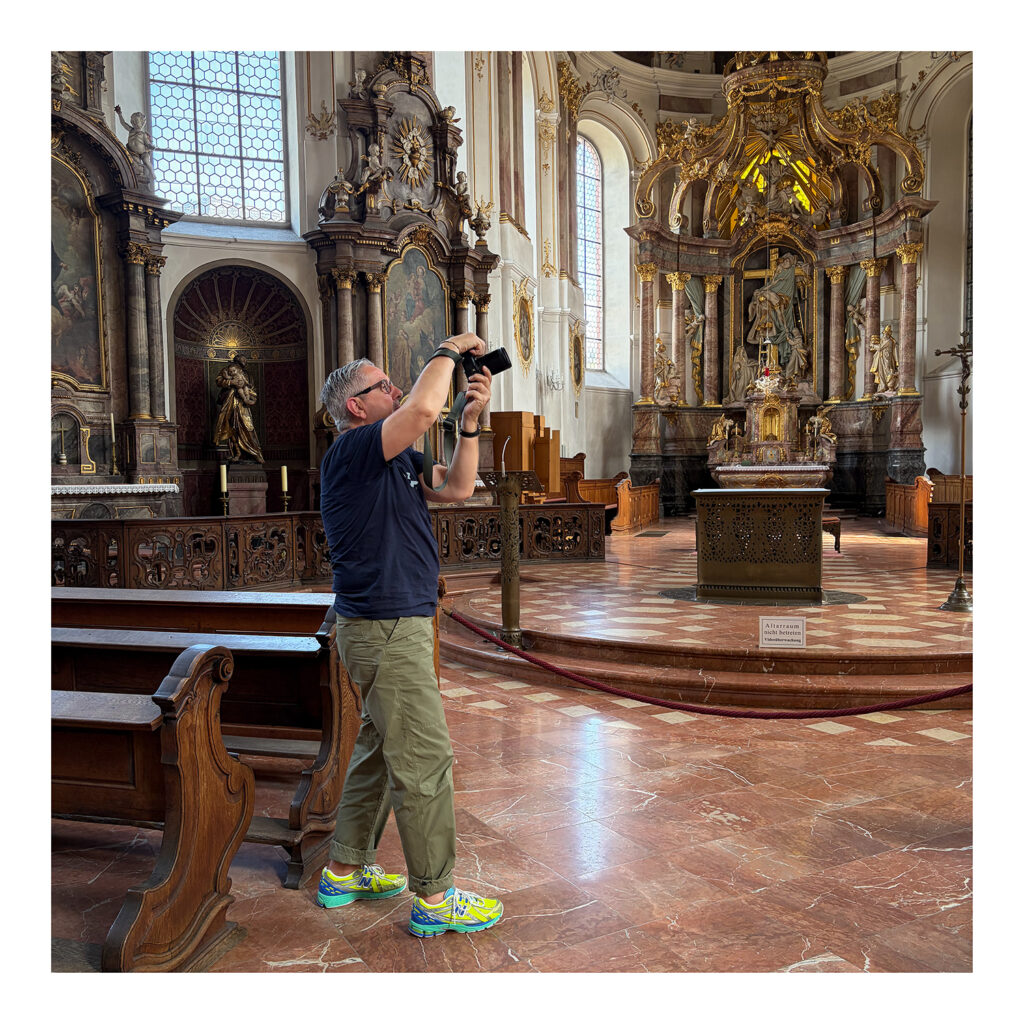
Each work is built through a slow and meticulous process. Separate photographs are stitched together, reconstructed and extensively refined, often requiring many hours of detailed work. Architecture begins to behave differently: columns curve and reach upwards, while the roof is opened and the sky becomes part of the architecture. Many of these panoramas are ultimately contained within a square, a deliberate contradiction between an extended field of vision and the absolute form of the square.
The result is not a literal documentation of the church, but an artistic interpretation of the space. Yet these buildings are about much more than architecture. For centuries, people came here to celebrate and mourn, to learn, seek comfort, care for one another and be part of a community. Today, as the traditional role of many churches changes, their future is uncertain.
Rather than seeing this only as a loss, Rosary of Enlightenment looks towards what might come next. Could these spaces once again bring people together across cultures, generations and beliefs? Could the values they have carried for centuries inspire new forms of community, care, learning and connection? I don’t have the answer. Rosary of Enlightenment is an invitation to keep looking, keep wondering and imagine that future together. Not simply to show more, but to make visible what we do not normally see.